


Allegory of Trade, Meissen
no 400
Description
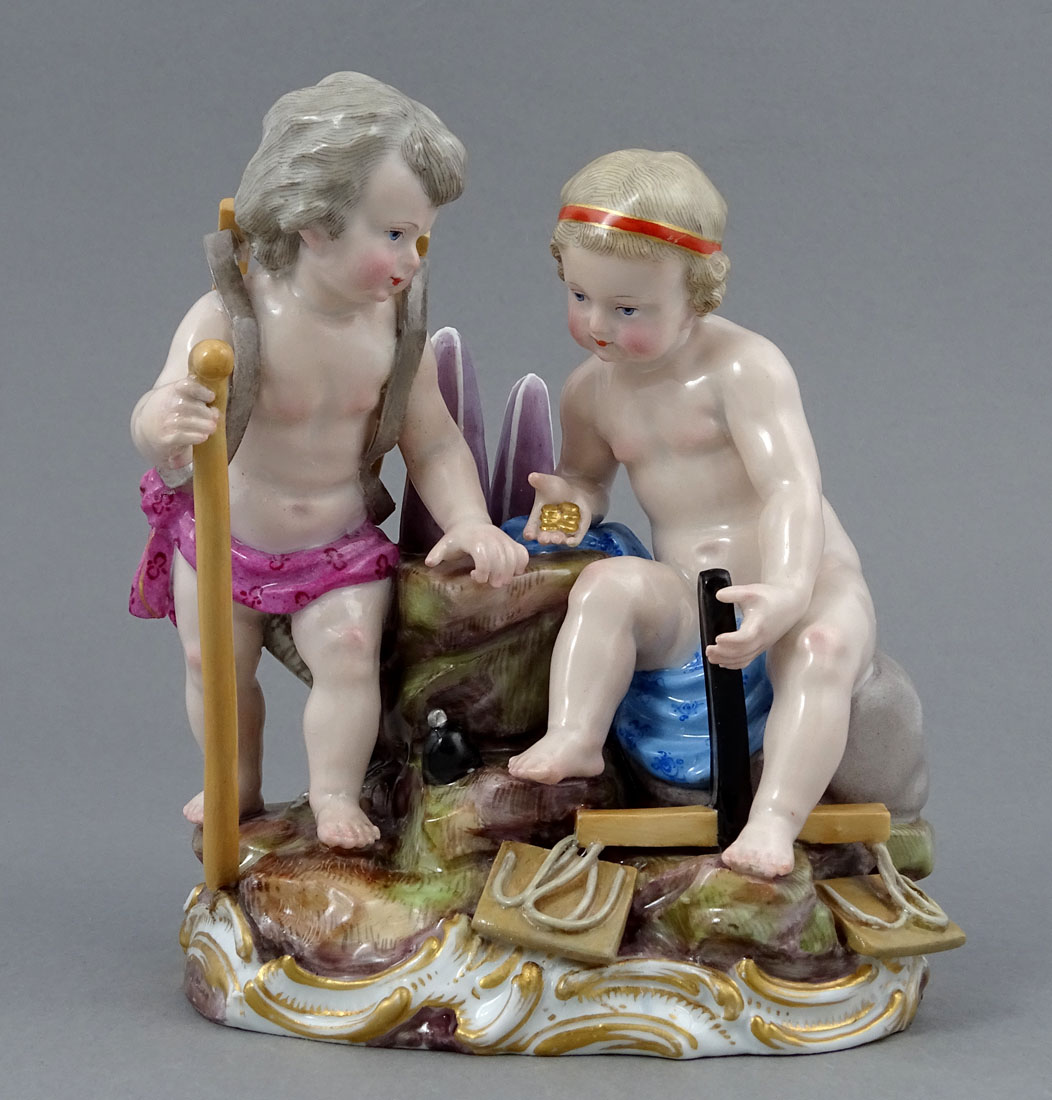
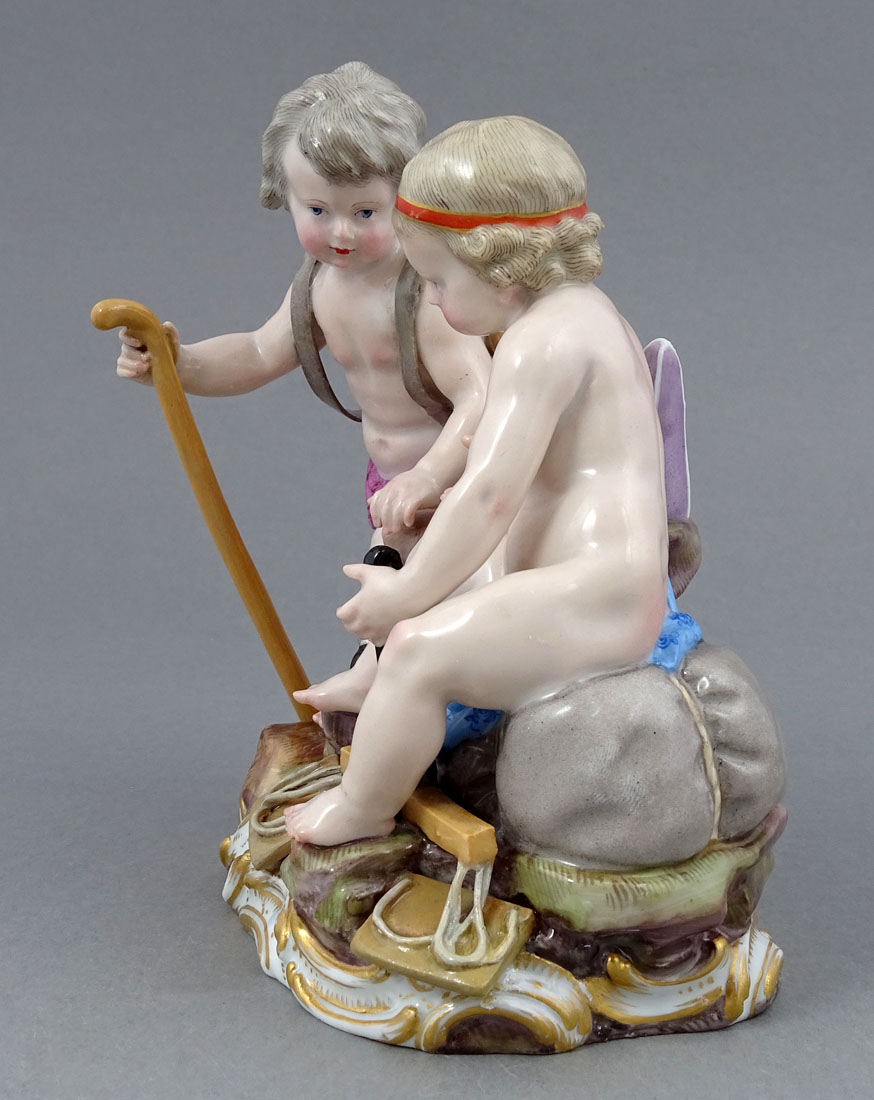
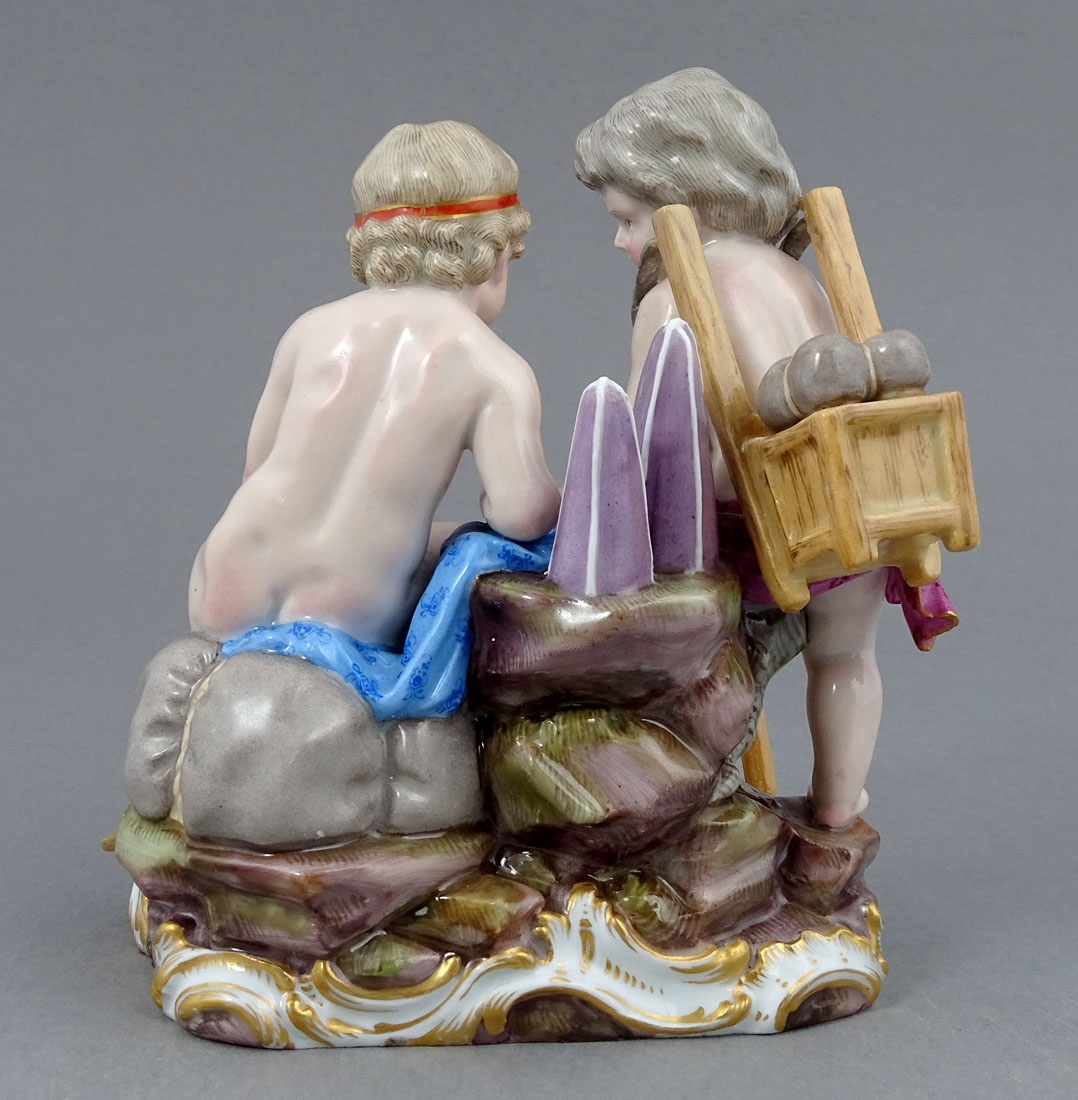
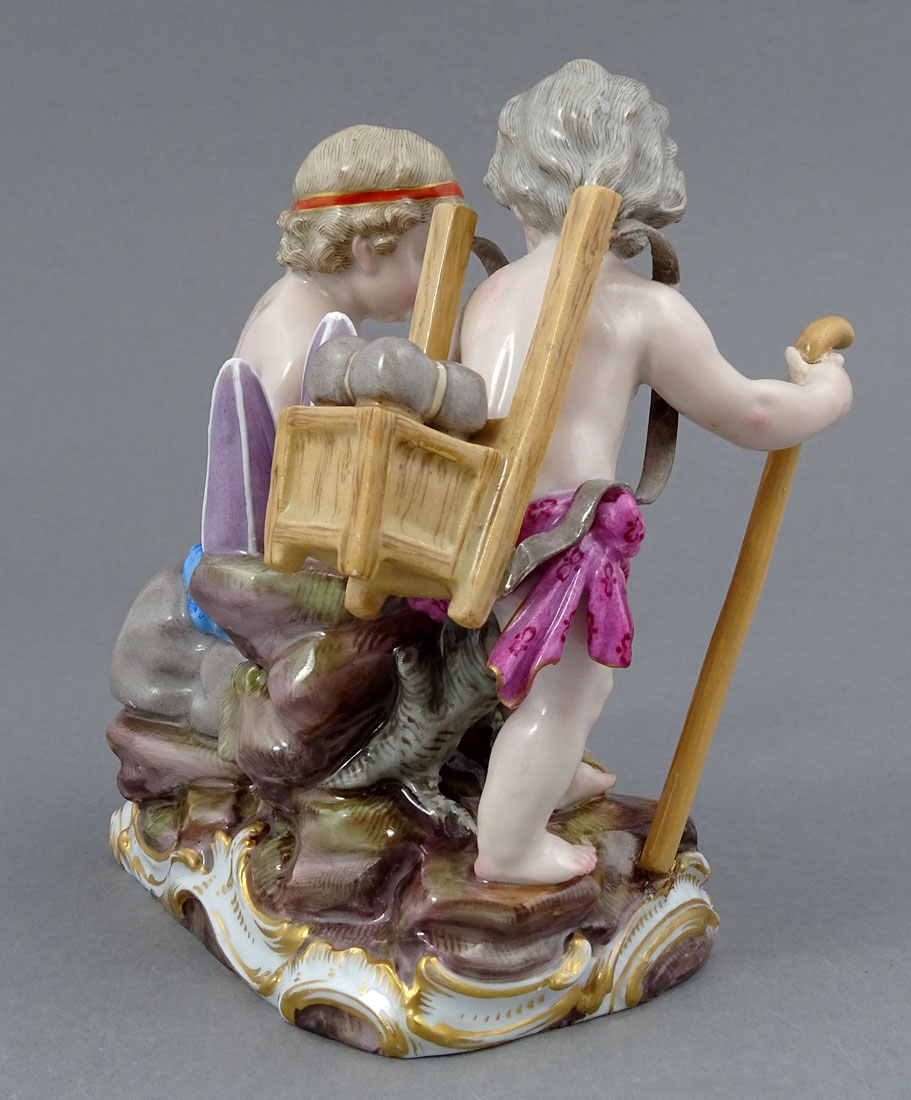
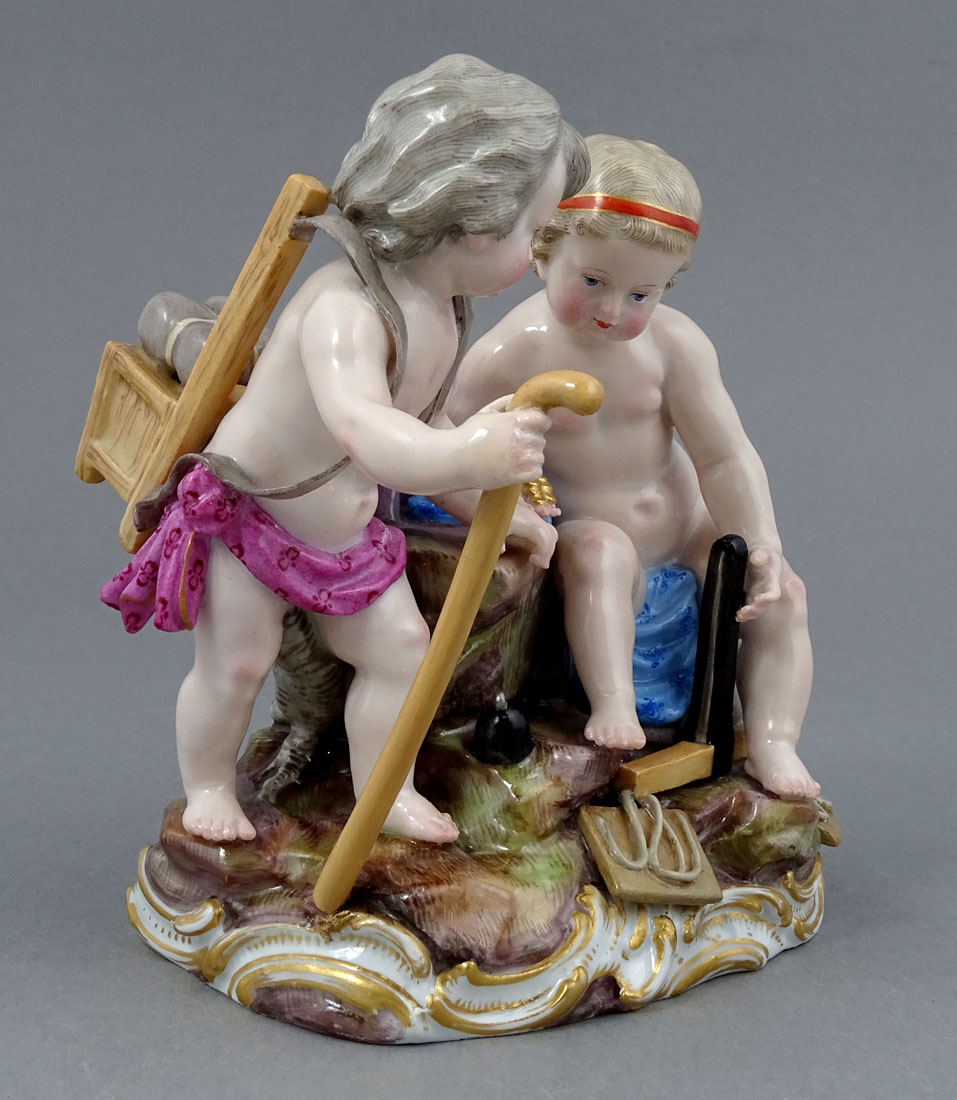
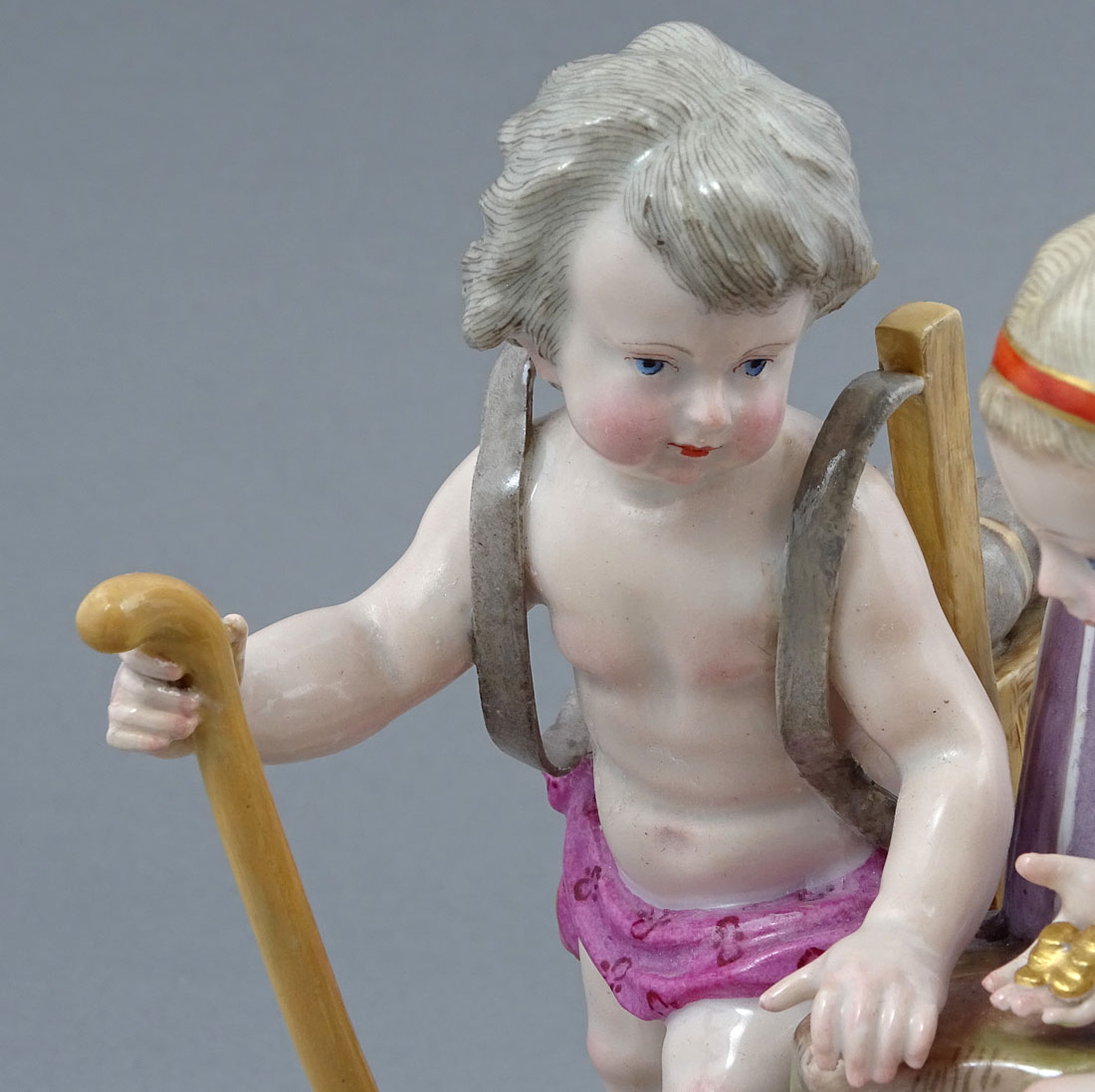
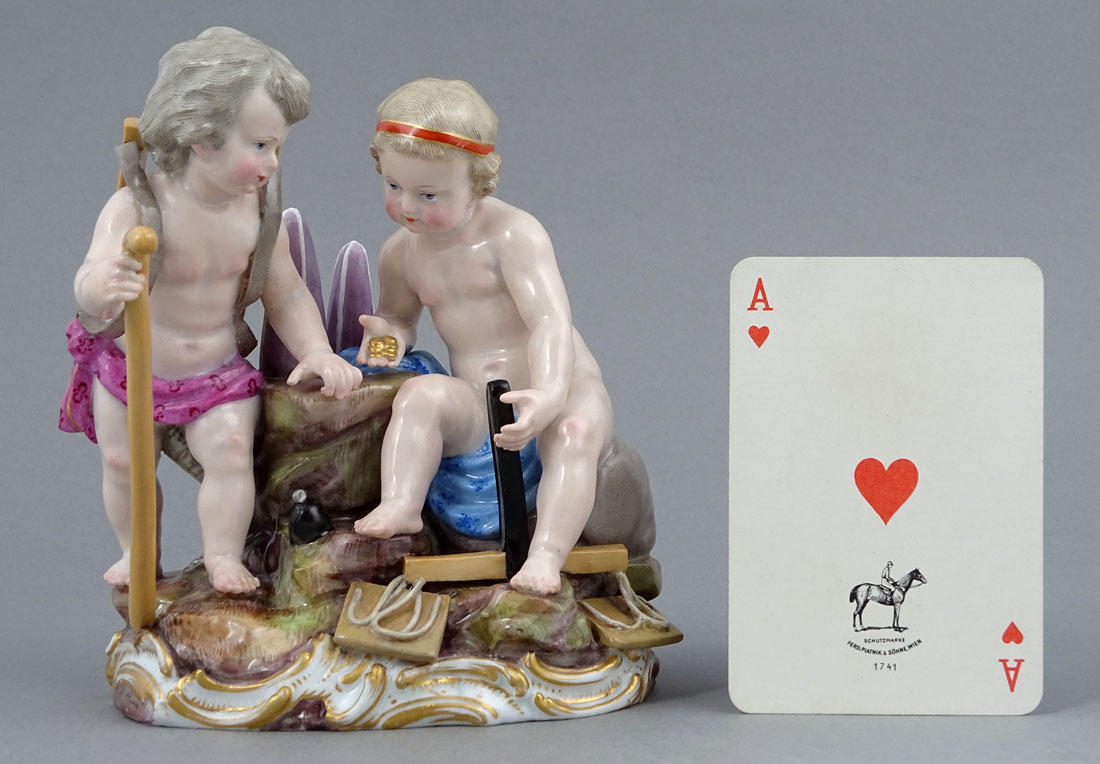
Figurine: Allegory of Trade, attributed to the sculptor Johann Friedrich Schönheit.
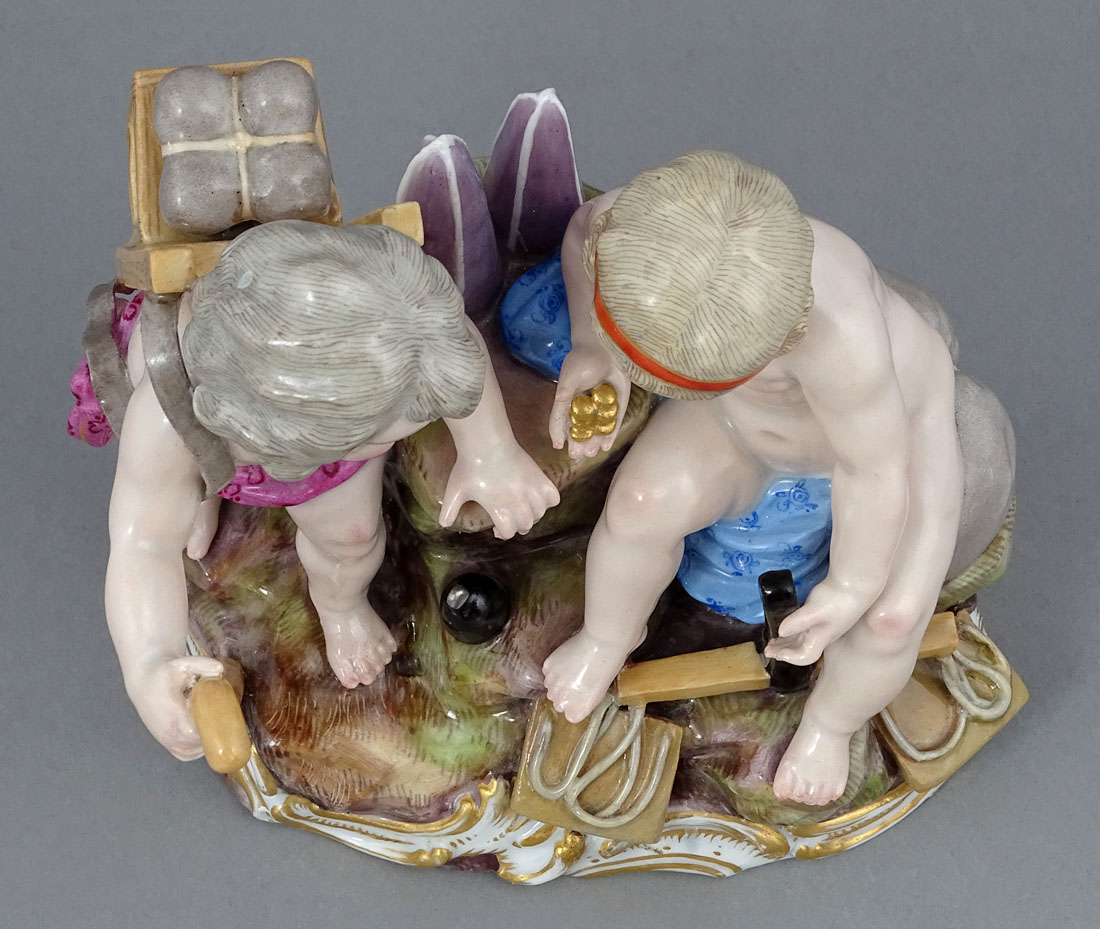
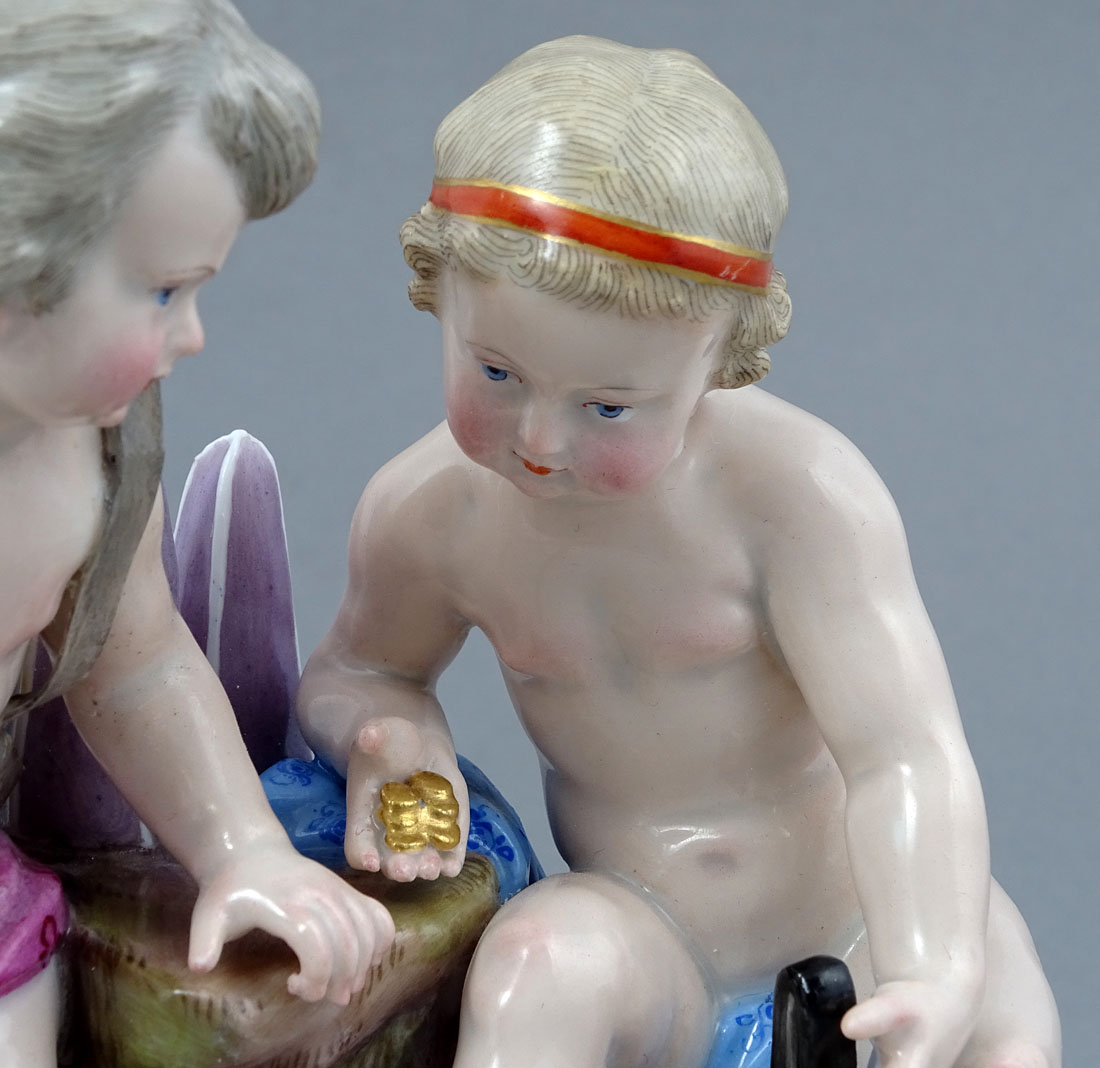
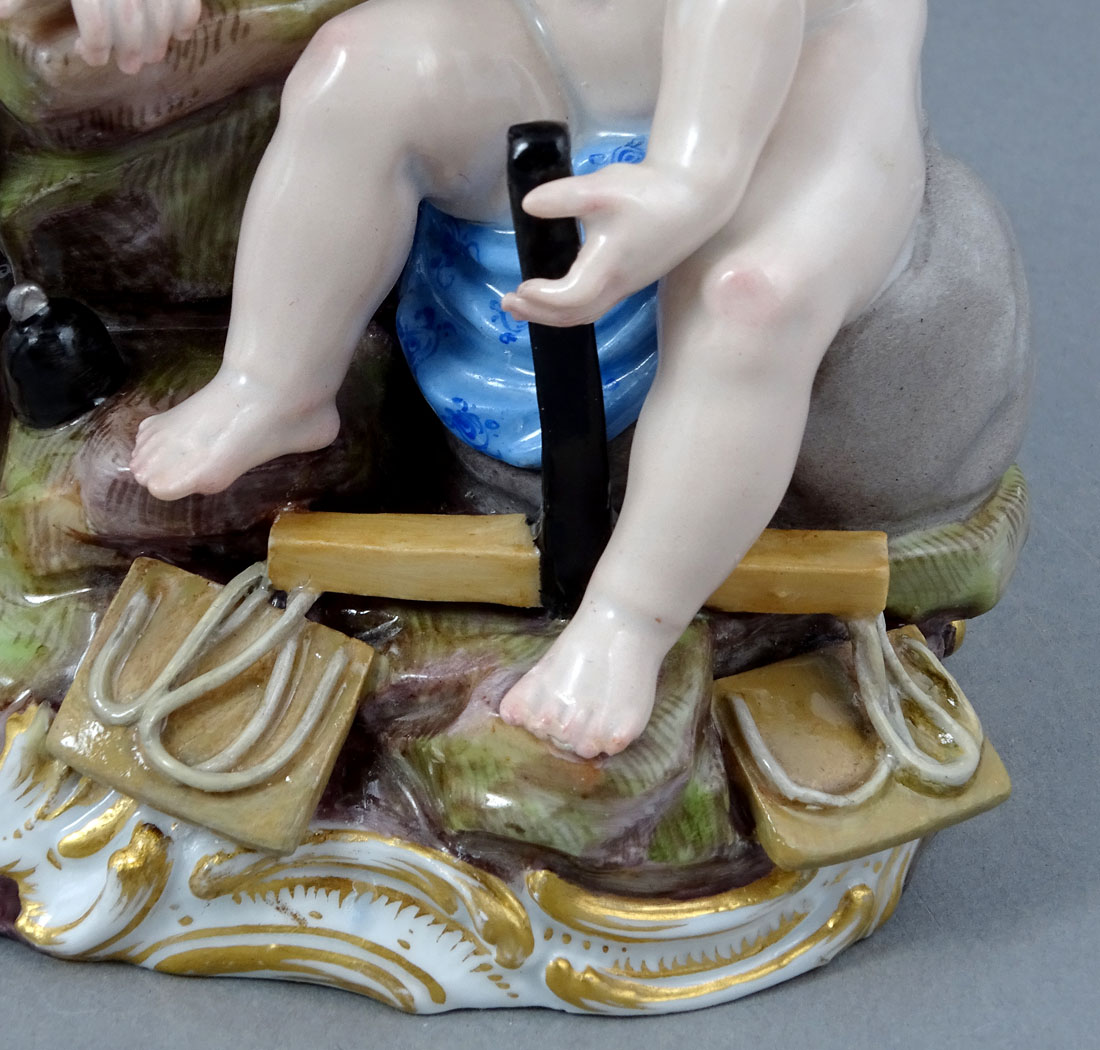
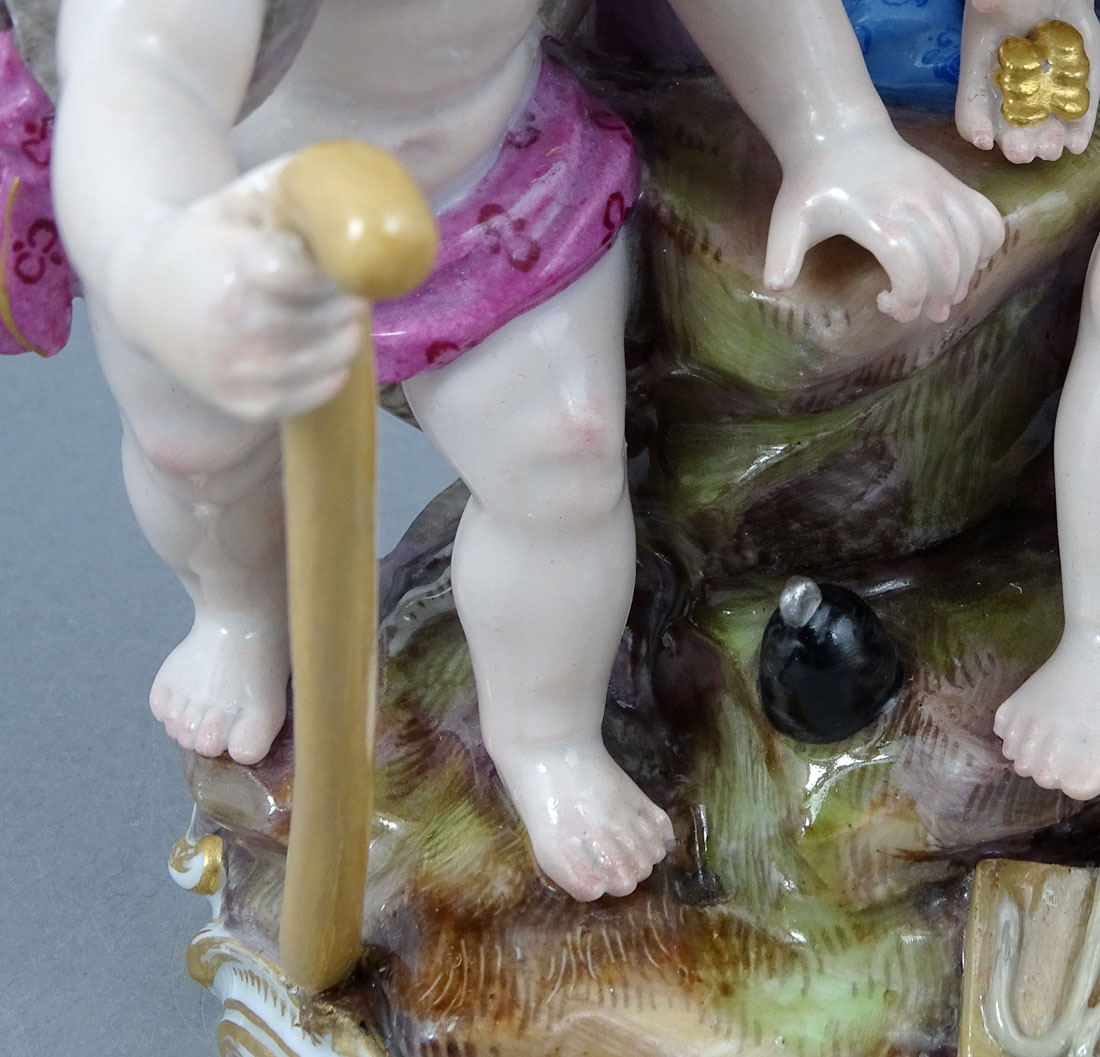
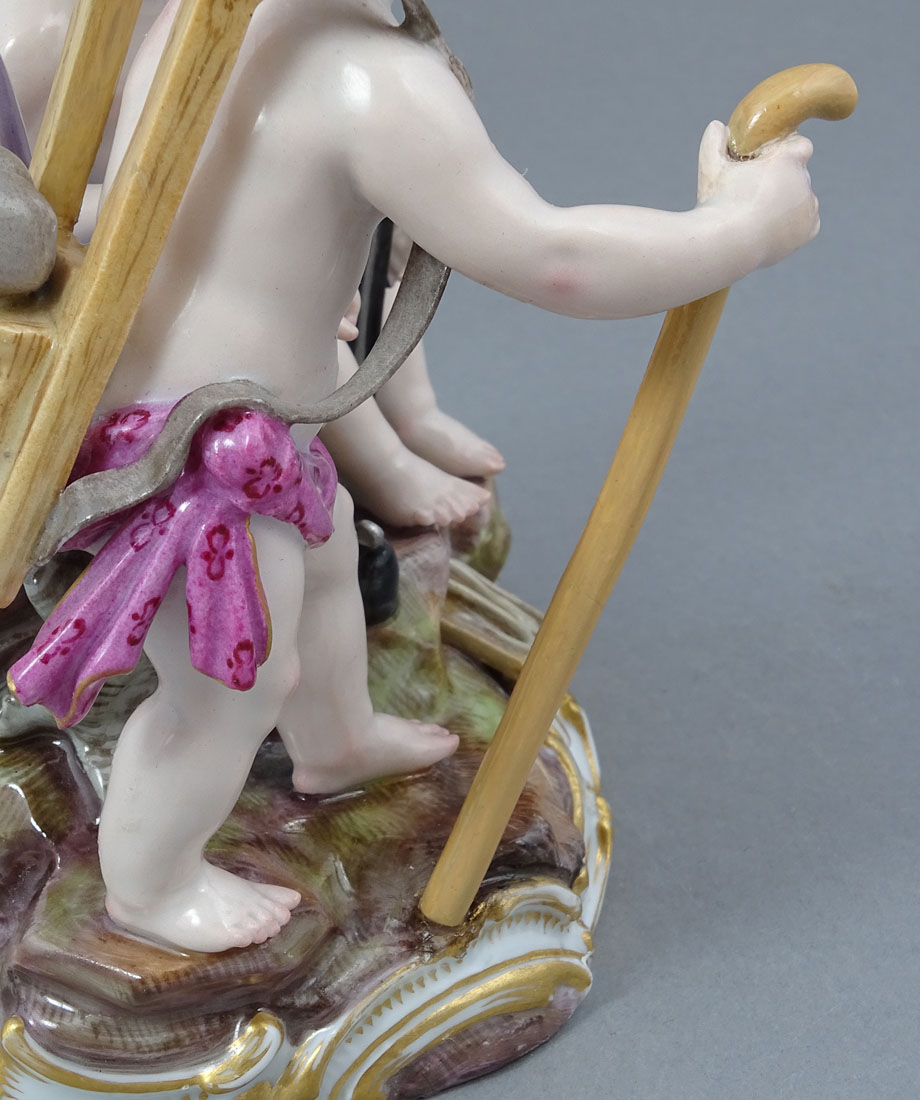
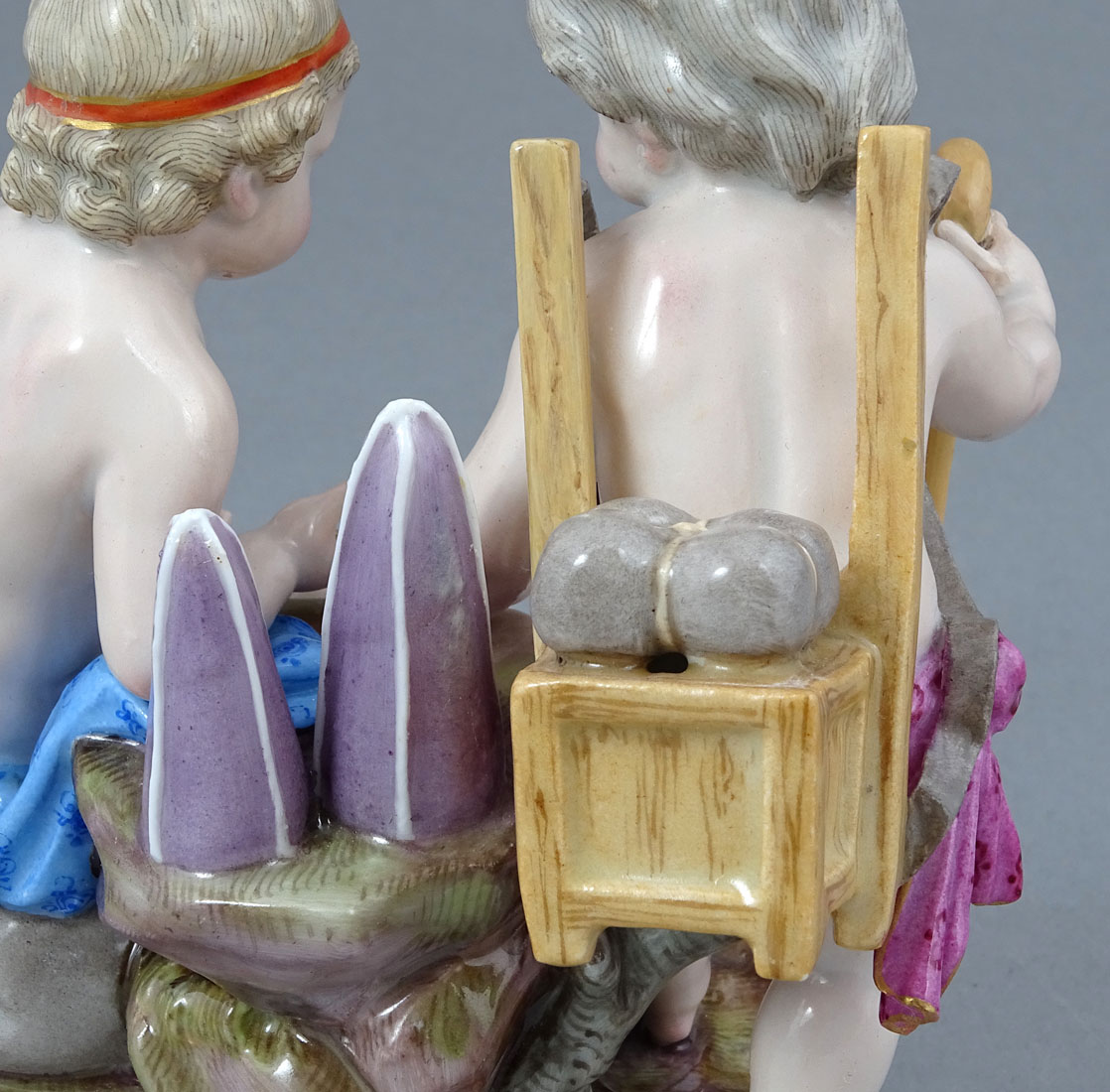
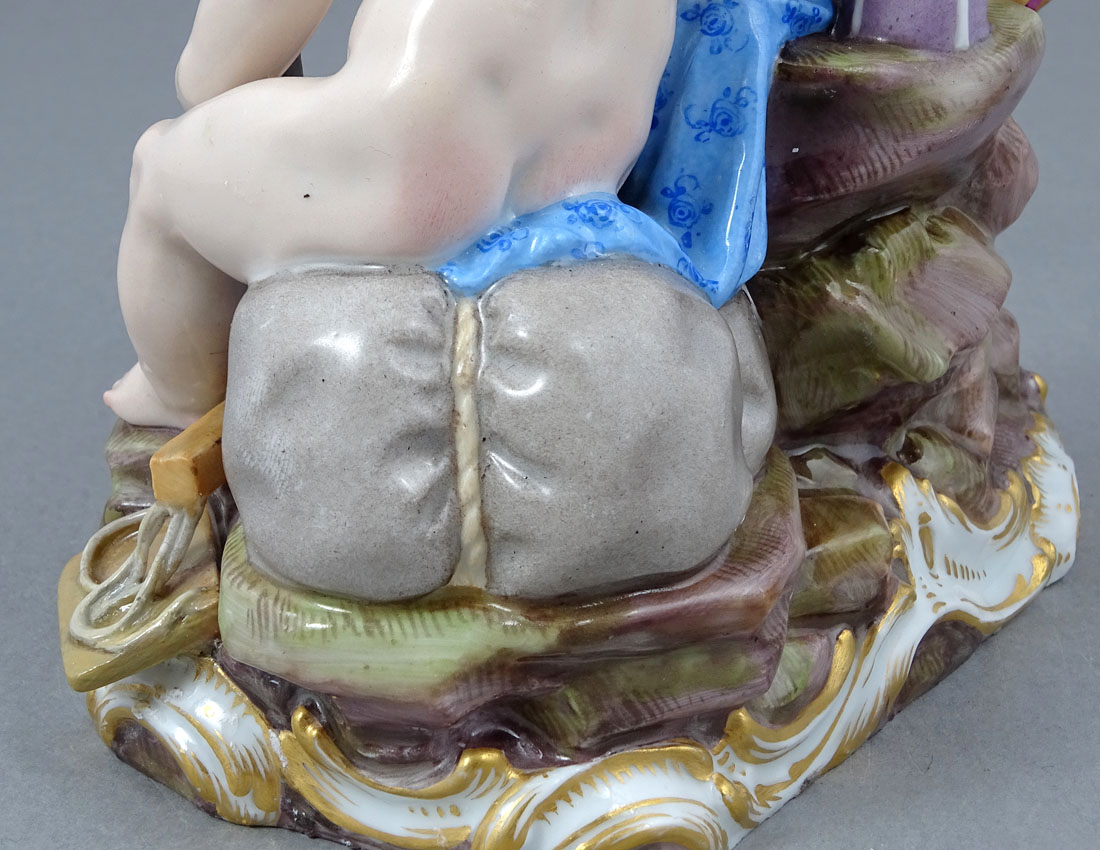
A merchant putto—a boy seated on a rock—holds gold coins in his right hand, meticulously counting them out. With his left hand, he leans against a large, black carpenter’s square (a tool used in craftsmanship and architecture, symbolizing precision and honest measurement in business). A red band adorns his head, and he is draped in a light, flowing blue cloth. A second boy, with a mass of fair curls, stands nearby, turning toward his seated companion. He leans firmly with his right hand on a long wooden traveler’s staff. Strapped to his back is a wooden porter’s frame carrying a large bundle—a transport pack tied with rope—and he wears a pink, patterned cloth around his waist. Arranged around the figures are classic props associated with 18th-century maritime and overland trade. Between the boys, standing upright on a rocky outcrop, are two purple-and-white forms. These are sugar loaves (*Zuckerhüte*); at the time the design was created (the 18th century), sugar imported from the colonies was an extremely exclusive commodity that formed the basis of great mercantile fortunes. On the ground, beside the seated boy’s feet, lie two wooden transport runners with ropes (used at the time to slide or haul heavy crates and barrels in ports or onto wagons). Right at the edge lies another flat, wooden parcel tied with string. Just behind it, at the base of the rock, a small, black, bulbous bottle or inkwell is visible (a prop used for recording ledgers and contracts). The sculpture perfectly captures the spirit of the Enlightenment, an era that favored combining serious, allegorical themes—whether scientific, economic, or mythological—with the light, graceful form of children at play.
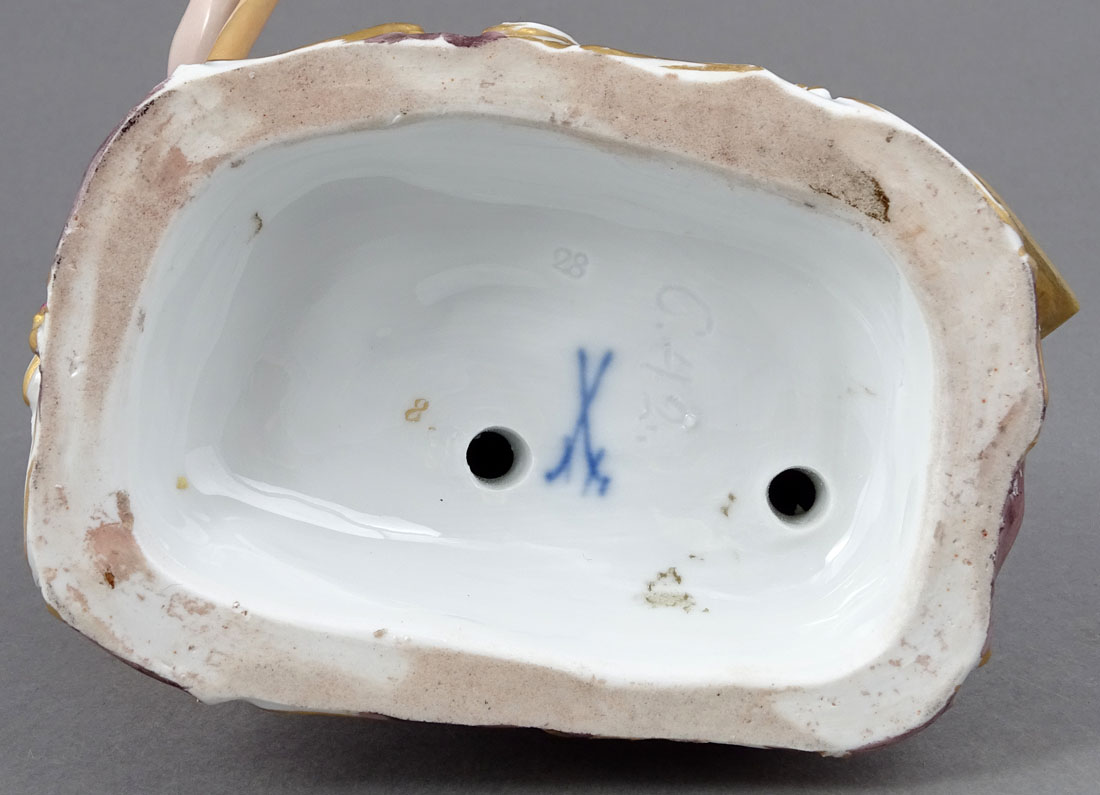
The figurine bears an underglaze cobalt mark on the underside in the shape of crossed swords—the mark of the Meissen manufactory used between 1850 and 1924. Also visible, impressed into the body, are the model number “C42” and the number “28”.
The figurine is in very good condition; the cane and a section of the scales have been repaired.
Size
14,5 x 13 x 10 cm
Price
4800 zł